

Overview
The paradigm shift currently unfolding in global manufacturing is defined by a transition from inefective logistics to a state of absolute operational certainty. For the modern enterprise, the complexity of global supply chains and the increasing demand for hyper-customized production have rendered traditional linear workflows obsolete. Today’s business and technical executives are looking toward a unified digital-physical architecture, where every physical asset, process, and person is mirrored in a high-fidelity virtual environment. This concept, known as the Digital Twin, has evolved far beyond a simple visualization tool. It is now a dynamic, bi-directional ecosystem that allows organizations to synchronize their global operations in real-time. By creating a comprehensive digital thread that connects the initial design phase to the final shop-floor execution, enterprises can eliminate the traditional friction between engineering and operations, ensuring that the strategic vision of the C-suite is perfectly reflected in the daily output of the factory.
NVIDIA's Digital Twin Solution
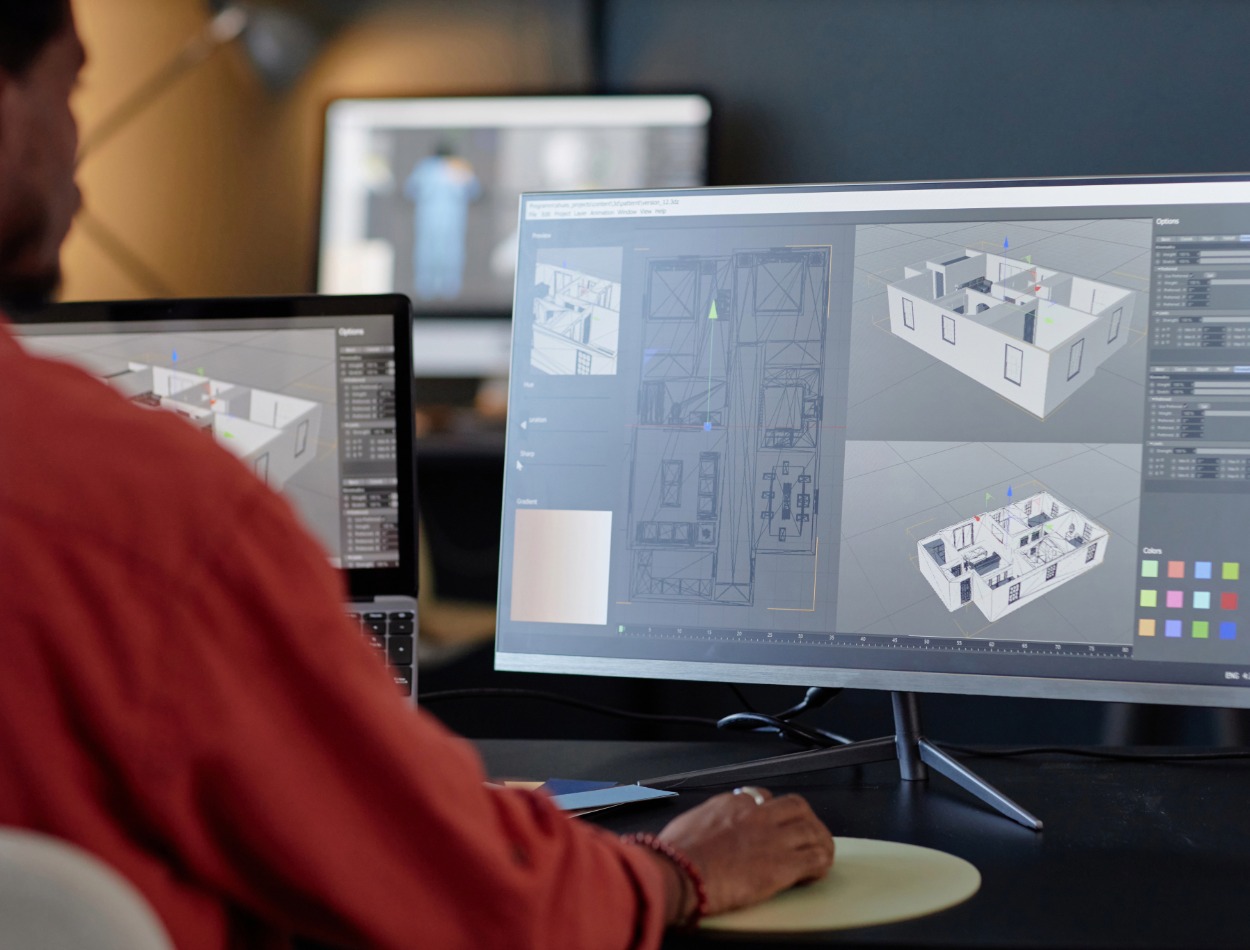
The true breakthrough in this space lies in the marriage of these twins with physics-based simulation environments. In an enterprise context, simulation acts as the "reasoning engine" for the digital twin. This is where high-performance computing meets industrial logic. By leveraging sophisticated platforms, such as those enabled by NVIDIA’s digital twin solutions, manufacturers can now simulate entire factory floors with millimeter precision and physical accuracy. This allows for virtual Commissioning—the ability to build, test, and optimize a production line entirely in a digital world before a single piece of hardware is bolted to the floor. For the executive team, this represents a monumental reduction in capital risk. Instead of discovering a bottleneck or a robotic collision during the expensive physical ramp-up phase, these issues are identified and resolved in the simulation. This fail-fast, succeed-early approach shaves months off development timelines and ensures that when the physical "On" switch is finally flipped, the facility is already operating at peak efficiency.
Furthermore, the enterprise digital twin provides a sophisticated framework for continuous optimization that extends long after the initial setup. By feeding real-time data from IoT sensors back into the simulation, the system can predict equipment failures before they occur and suggest autonomous adjustments to production schedules to compensate for supply chain disruptions. This level of predictive mastery is what separates a resilient enterprise from a vulnerable one. It allows leaders to move from a reactive posture—constantly fighting fires—to a predictive one, where the focus is on maximizing Overall Equipment Effectiveness (OEE) and meeting sustainability targets. For the customer, this translates into a guarantee of quality and a commitment to delivery dates that are backed by mathematical certainty. In an era where trust is the primary currency of B2B relationships, the digital twin serves as a transparent proof-of-work, demonstrating that the enterprise is not just keeping pace with Industry 4.0, but is actively defining its trajectory.
.jpeg)
Physical world is limited by the laws of physics, but through digital twins and simulation, the enterprise is limited only by the speed of its data.
Ultimately, the adoption of digital twins and simulation is a cultural and strategic investment in the future of the autonomous factory. It requires a move away from siloed data towards an open, collaborative environment where designers, plant managers, and executives can all interact within the same virtual space. As these digital models become more sophisticated, integrating advanced AI and machine learning, they become self-learning entities that improve with every cycle. For the enterprise looking to maintain a competitive moat, the goal is no longer just to build products, but to build a digital intelligence that can manufacture those products better, faster, and more sustainably than ever before. The path forward is clear: the physical world is limited by the laws of physics, but through digital twins and simulation, the enterprise is limited only by the speed of its data.
.jpeg)
.jpeg)
.jpeg)